Establish clarity
Assess the current state, focus on the right customers, define the desired result, and select the work that will advance it.
The business book
A five-stage system for leaders who want clear direction, stronger performance, sound alignment, and less need for constant action from the person at the top.
 Includes a free leader workbook
The five business stages
The five stages help leaders assess what is happening, set sound priorities, assign the work, and review the result.
Assess the current state, focus on the right customers, define the desired result, and select the work that will advance it.
Strengthen self-awareness, trust, culture, motivation, and the ability of others to lead.
Clarify roles, hiring, communication, training, and support so people can perform with less direct control.
Set clear standards and use feedback, results, and sound judgment to guide improvement.
Build engagement, skill, accountability, and follow-through so plans lead to consistent performance.
One connected system
Use each part in order. The leader's first assessment provides a clear point of comparison for team and staff input.
Read the book to study the five stages and the leadership principles within them.
Use the free Leader Workbook in private to record your view of the current state.
Use the Team Workbook to find where leadership views and staff experience agree or differ.
Select the most urgent gaps and set clear commitments for the next 30 to 90 days.
Book and workbooks
This site lists the ePub book. Amazon offers the paperback and Kindle editions.
Study a five-stage leadership system for problems that often limit growth: scattered effort, unclear priorities, overlapping duties, uneven communication, weak measures, and too many choices that return to the senior leader.
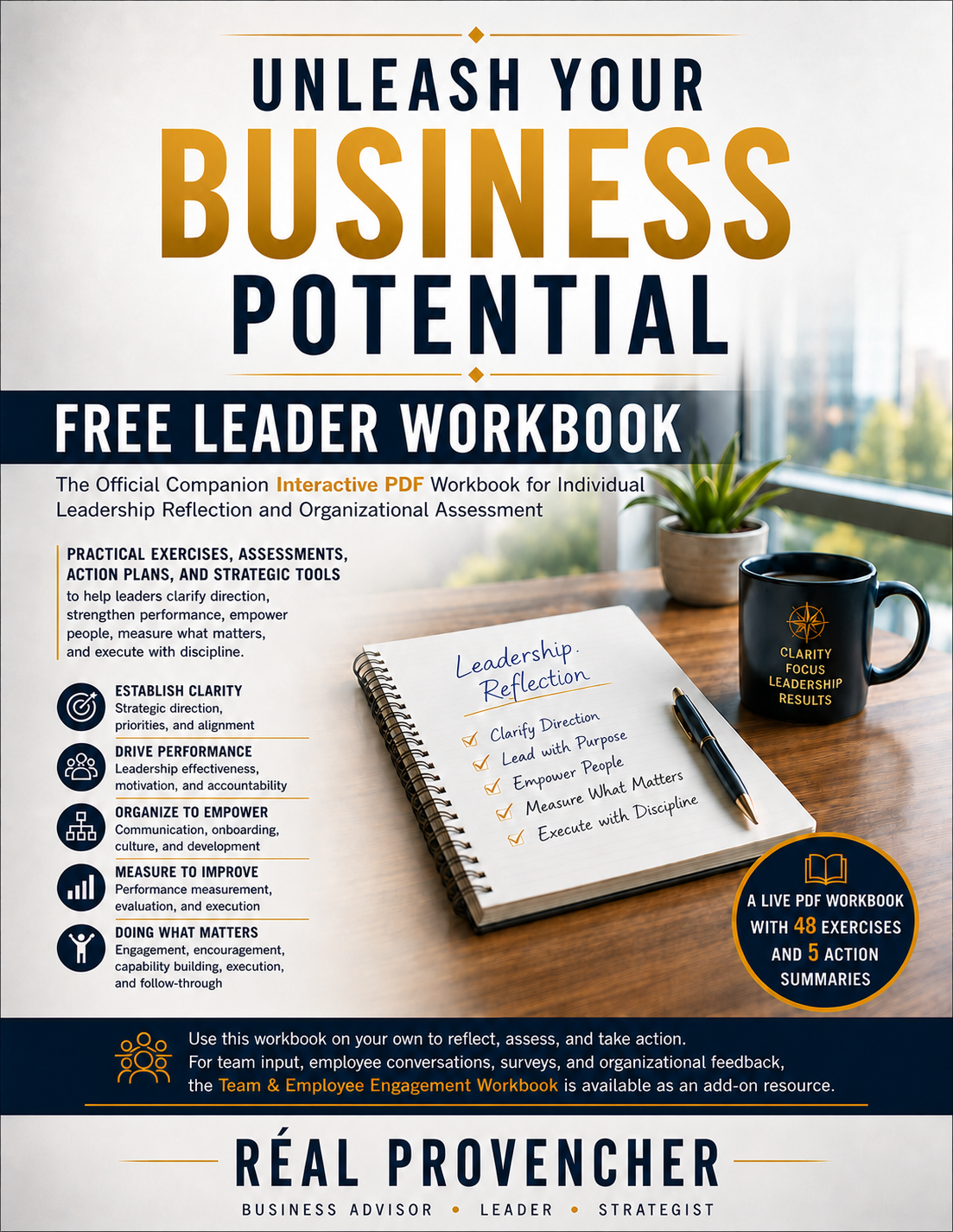
Complete a private assessment before you seek group input. Clarify your assumptions, identify key gaps, set priorities, and define firm commitments for the next 30 to 90 days.

Gather team and staff input through guided talks, surveys, review tools, and shared forms. Compare that input with the leader's first assessment and identify where views match or differ.
The purpose
The aim is not to add more work. It is to help owners, executives, managers, leadership teams, boards, advisors, and coaches make sound choices and follow through.
Revisit priorities, compare leadership views with staff experience, measure progress, and adjust the plan as conditions change.